A stuck trail pole almost always comes down to one of two things: dried mud or sweat salt wedged in the gap between two sections, or white aluminium oxide that formed because the pole was stored while still damp. Both can be freed at home without special tools: start by twisting the right way with rubber gloves, then soak in warm soapy water, and only then move to boiling water or WD-40 if it still will not budge. The one thing to avoid is brute force on carbon poles or folding poles with an internal cord.
Quick summary
- Identify the lock before you pull: twist-lock, lever lock (flick-lock) or Z-fold.
- Rubber gloves + counter-twist the two sections. Solves about half of all cases.
- Soak in warm water with dish soap for 20–30 minutes for mud and salt.
- Boiling water on the outer section for 1–2 minutes for aluminium poles seized by oxide. Not for carbon or folding poles.
- WD-40 into the gap, wait 15 minutes, twist, then clean it off completely before reassembling or a twist-lock will slip.
- White vinegar overnight if the oxide is thick.
- Still stuck: take it to a shop or replace the section. No pliers.
Why poles get stuck
Trail poles are aluminium or carbon tubes nested inside each other with less than a millimetre of clearance. That gap is where everything ends up.
- Red basalt mud from Đà Lạt or Măng Đen, or rice-terrace mud from Sa Pa, is forced into the gap every time you plant the pole and dries into a thin layer of cement. After a wet-season Vietnam Mountain Marathon this is reason number one.
- Sweat salt runs down the shaft for ten hours, collects in the gap and crystallises as it dries.
- Aluminium oxide is the white powder you find when you pull a pole apart after a few weeks in the cupboard. It forms when the pole is collapsed while still damp, which is easy at 80–90% humidity in Vietnam. Oxide takes up more room than the metal it came from, so the two sections weld themselves together.
- An over-tightened twist-lock at the start of a race, after which the internal expander plug jams inside the tube.
Knowing the cause tells you the method: mud and salt dissolve in water, oxide needs heat or mild acid, a jammed expander needs the right twist rather than a pull.
Step 1: identify the lock type
The method depends entirely on the locking mechanism.
| Lock type | How to recognise it | How to open | Avoid |
|---|---|---|---|
| Twist-lock | No lever; you twist a section to tighten | Turn the lower section anticlockwise seen from above, then push in | Pulling hard before loosening: the expander jams further |
| Lever lock (FlickLock, Speed Lock) | External plastic or metal lever | Open the lever, back off the tension screw 1–2 turns, then pull | Boiling water on plastic levers |
| Z-fold (Black Diamond Distance, Leki Micro, Forclaz folding) | Three sections joined by an internal cord, button in the grip | Press the button, pull the top section; warm water on the joints | Boiling water and WD-40: they damage the Kevlar/Dyneema cord |
If you are not sure which you own, find the model name on the top section and check the maker's site before doing anything else.
Step 2: rubber gloves and counter-twist
The first method and the lowest-risk one. Put on rubber washing-up gloves, or wrap a jar-opener pad around each section, one hand per section, right next to the joint. Twist your hands in opposite directions in short bursts, without yanking.
With a twist-lock, make sure you are turning in the loosening direction. Turn the wrong way and you are tightening the expander and jamming the pole harder. If the section turns but will not slide out, the expander is already free; what is left is mud or oxide, so move to step 3.
One person holding and one twisting is far easier than doing it alone.
Step 3: soak in warm soapy water
This is safe for every pole, carbon and folding included, so try it before the two harsher methods.
Fill a bucket or basin with water at about 40–50°C (bath-hot, not steaming) and add a few drops of dish soap. Soak the stuck joint for 20–30 minutes. The soap softens mud and dissolves salt. Then twist as in step 2 while the pole is still wet.
If it comes apart, separate every section, scrub inside the tubes with a bottle brush, rinse with clean water and stand them upright to dry for 24 hours before reassembling.
Step 4: boiling water for aluminium poles
The principle: metal expands when heated. Pour boiling water over the outer section for 1–2 minutes; the outer tube expands before the inner one by a few hundredths of a millimetre, enough for the oxide or dried mud to let go. Twist and pull immediately while hot, wearing thick gloves because the section will be very hot.
Three limits:
- Aluminium only. The epoxy in a carbon tube tolerates this temperature in theory, but repeated boiling water makes the finish brittle and it is not worth gambling a 3–5 million VND (120–200 USD) pole.
- Not on folding poles. The internal cord is Dyneema or Kevlar in a plastic sheath, and the sheath softens from around 80°C.
- Keep grips, plastic levers and rubber tips out of the pour if you can. Plastic levers can warp.
Pour onto the outer section rather than dunking the whole pole in a pot: you want a temperature difference between the two tubes, not both of them hot.
Step 5: WD-40 or penetrating oil
WD-40 is a penetrating solvent and water displacer, not a long-term lubricant. It creeps into the capillary gap, dissolves some oxide and lifts dried mud. Spray a small amount straight into the joint, lay the pole flat for 15 minutes, twist as in step 2, and repeat at most two or three times.
What matters comes after it is free: clean every trace of oil out of the tubes with paper towel wrapped around a stick, or wash with soapy water. A twist-lock holds by friction alone; a thin oil film and the pole will slide down every time you load it, which is dangerous on a technical descent. Oil on a lever lock's clamp makes it slip too.
Do not spray WD-40 on folding poles: it soaks into the cord and the joint sleeves and you cannot clean the inside afterwards.
Step 6: white vinegar for heavy oxide
If there is a lot of white powder and boiling water was not enough, household vinegar (4–5% acetic acid) dissolves aluminium oxide slowly but reliably. Soak the joint in neat vinegar, or 1:1 with warm water, overnight, then twist. Rinse very thoroughly afterwards: leftover vinegar keeps eating the aluminium.
Again, aluminium poles without an internal cord only.
When to stop
If the pole still will not move after all five methods, or you can see a dented tube, a lengthwise crack, or a section that spins freely but will not pull out (the expander has snapped inside), stop. Pliers, a wrench or a vice will dent the tube, and a dented aluminium tube never locks properly again. Many bike shops can extract it with soft-jaw clamps; or buy a replacement section, which most brands sell individually for far less than a new pair.
Prevention: five minutes after every run
A stuck pole is almost always the result of putting it away damp. After a muddy race like Dalat Ultra Trail or Vietnam Jungle Marathon:
- Separate all the sections as soon as you are back at the hotel; do not wait until you get home.
- Rinse the inside of the tubes with clean water and wipe the outside with a damp cloth.
- Stand them upright, open end up, and let them dry completely. In an air-conditioned room that takes all night.
- Reassemble without oil. Twist-locks work on dry friction; a lever lock can take one drop of silicone on the lever pivot, never on the tube.
- Store the poles extended, locks loose, not fully collapsed.
In Vietnam, add one habit: between races, keep the poles somewhere airy rather than in a closed fabric bag in a wardrobe. Wardrobe humidity is aluminium's main enemy.
If you are new to poles, our guide What is trail running? has a basic gear section, and the Useful links page lists Vietnamese shops such as Activ Store, Imsport, TAC Checkpoint and Supersport where you can ask about replacement sections.
Sources: Black Diamond, Leki and Decathlon (Forclaz) care guides for twist-lock, lever-lock and folding poles; Chạy Địa Hình's own experience after the Đà Lạt and Sa Pa wet seasons. Updated September 2026.
Keep reading
 Tin tức
Lamdong Trail 2025 Postponed: Your Bib Moves to 2026
An urgent order on 6 November 2025, storm no. 13, 5,000 runners and a whole edition moved to 6–8 November 2026. What happened, and what to do with your bib.
Read →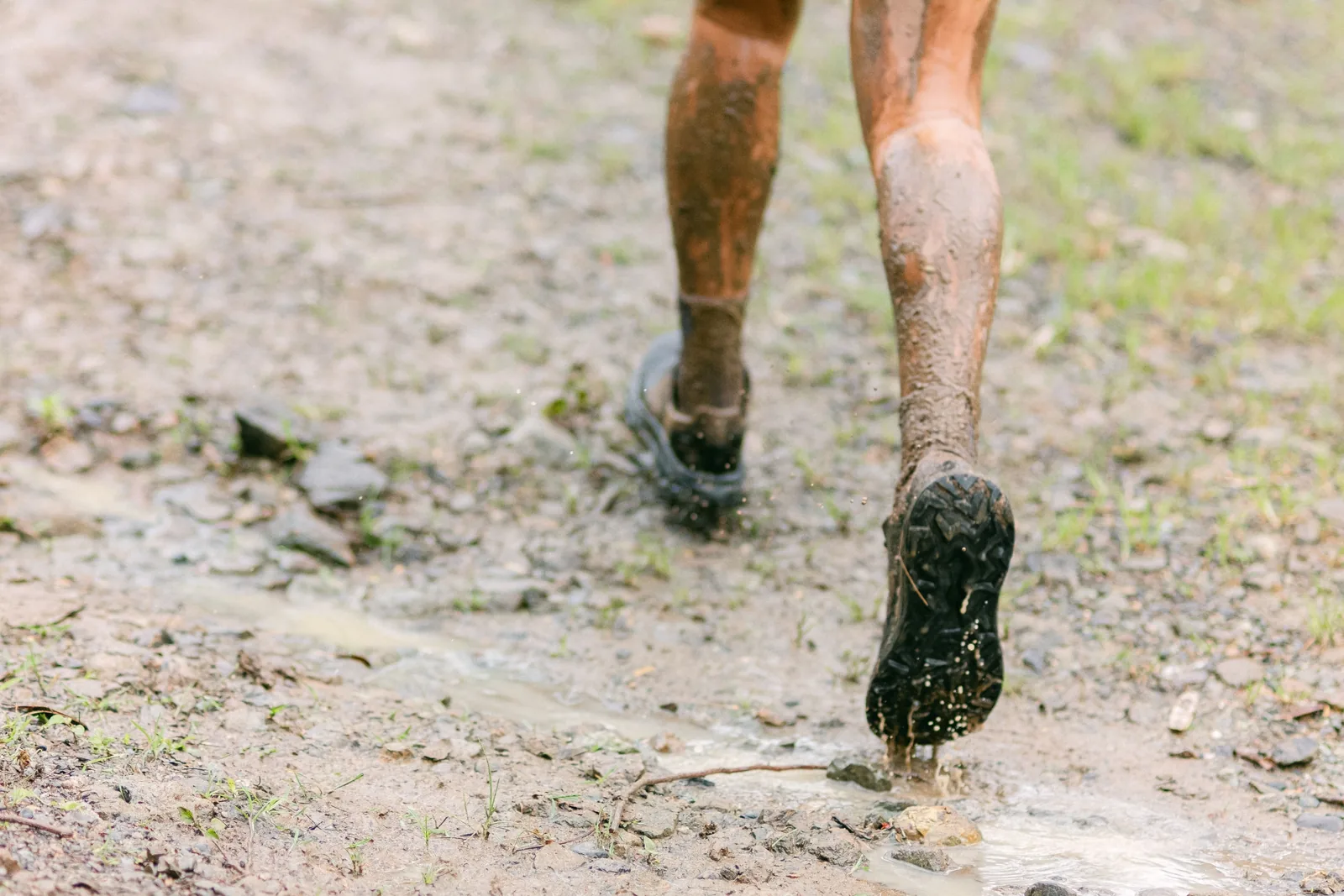 Guide
Guide
What Is Trail Running? A Beginner's Guide to Trail Running in Vietnam
Trails, elevation gain (D+) and how mountain running differs from the road — the essentials before your first race.
Read → Ho Chi Minh City
Where to Trail Run Near Ho Chi Minh City: Best Trails & Mountains
Saigon itself is flat, but real trails sit a short trip away — Núi Bà Đen, Núi Dinh, Núi Chứa Chan and the monkey pagoda at Châu Thới.
Read →