Homemade Sports Drink for Trail: Malto, Sugar, Lime, Salt
A homemade trail sports drink for 500 ml and 750 ml bottles: maltodextrin, sugar, lime and salt, building from 30 to 60 g of carbs per hour over 6 weeks.
12.10.2026
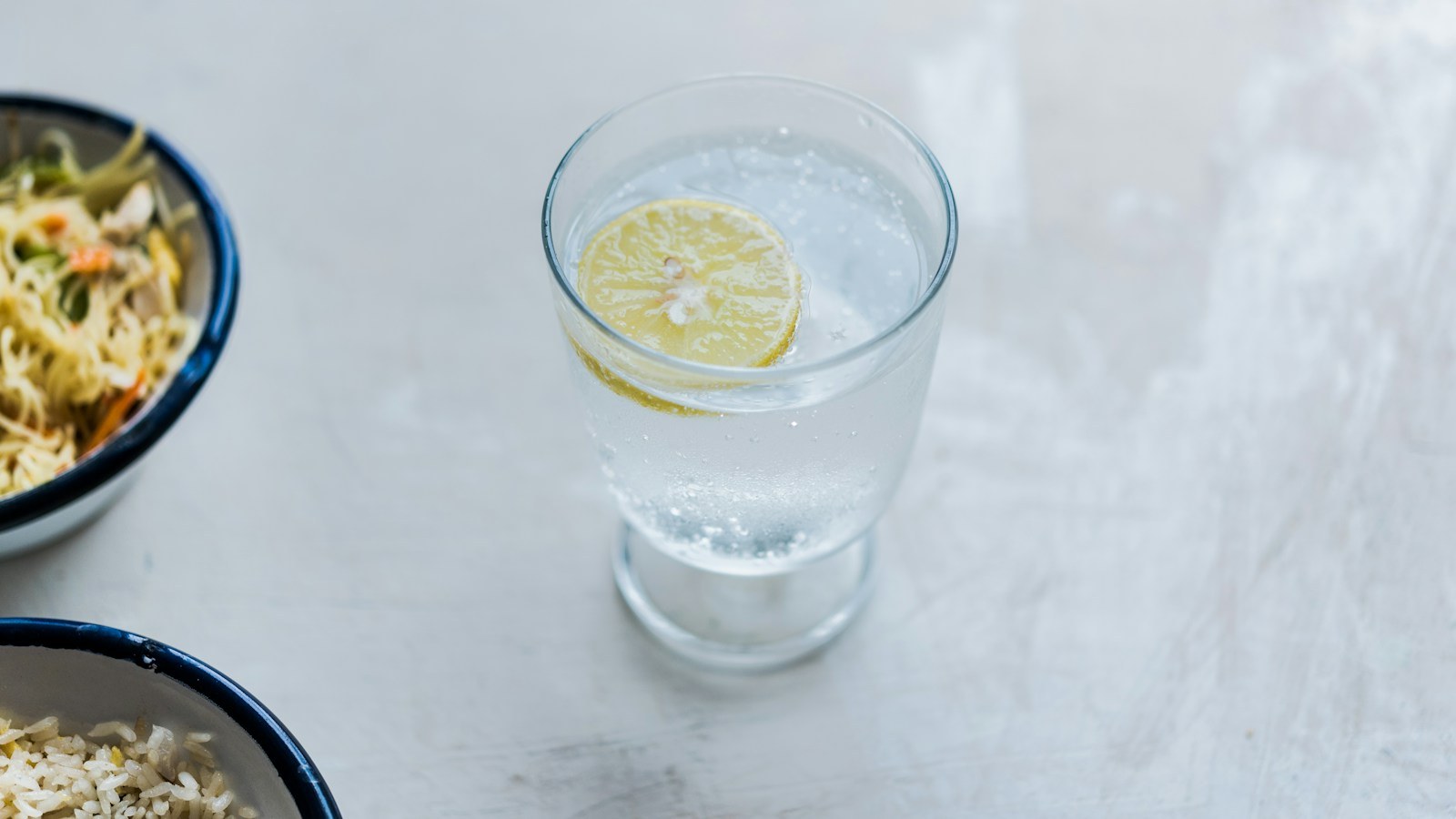
The base recipe for one 750 ml bottle, drunk over one hour of running: 30 g maltodextrin + 30 g sugar + 1 g salt + the juice of half a lime. That gives you 60 g of carbs and about 390 mg of sodium, and it tastes like a light salted lemonade. But don't start at 60 g: train your gut from 30 g of carbs per hour, then 45 g, then 60 g over about 6 weeks.
Mixing your own sports drink means you know exactly how much sugar and salt you take in, and you can adjust it to the weather. Below: the recipe for each stage in 500 ml and 750 ml bottles, how to mix it, how to carry it on race day, and the safety notes.
Quick summary
- Easy ratio: half maltodextrin, half sugar (by weight).
- Salt: about 1.4 g per litre (0.7 g for 500 ml, 1 g for 750 ml), roughly 550 mg of sodium per litre.
- Lime or lemon: 15–25 ml of juice for taste, not as a mineral source.
- Comfortable strength: about 6–8% carbs (60 g in 750 ml is 8%).
- Build up: 30 g/h (weeks 1–2) → 45 g (weeks 3–4) → 60 g (weeks 5–6).
- Always test on long training runs, never for the first time on race day.
Why mix maltodextrin and sugar?
Maltodextrin is a carb powder made from partly broken-down starch (usually corn, rice or potato): essentially short chains of glucose. It's far less sweet than sugar, so you can pack in more carbs without a sickly-sweet drink.
Table sugar (sucrose) is half glucose, half fructose. Adding sugar to maltodextrin gives you both glucose and fructose.
According to Asker Jeukendrup (Gatorade Sports Science Institute), the gut absorbs glucose through a transporter that saturates at about 60 g per hour; fructose uses a different one. So:
- Up to 60 g/h: any ratio works, and half malto, half sugar is fine (glucose : fructose ≈ 3:1).
- Above 60 g/h (trained runners, races over 2.5 hours): you need more fructose, at roughly 2:1 glucose : fructose. With maltodextrin and sugar, that is 1 part malto : 2 parts sugar.
Sugar only? It works, but at 45–60 g the drink gets very sweet and many runners can't face it after 2–3 hours. That's what the maltodextrin is for.
Ingredients, kit and where to buy in Vietnam
- Maltodextrin, food grade: look in baking-supply shops, food-ingredient stores, sports-nutrition shops or on the big e-commerce platforms (search "maltodextrin"). Pick a bag with a Vietnamese label, a clear origin and an expiry date.
- White sugar, the ordinary kind.
- Fine table salt (iodised is fine).
- Fresh limes (the common "chanh" in Vietnam).
- A 0.1 g kitchen scale: almost essential to measure salt accurately.
- A 500 ml soft flask or 750 ml bottle, and a few small zip bags for pre-portioned powder.
Gels and electrolyte capsules to use alongside are sold at the trail gear shops.
The lime-and-salt trick: why it works
Vietnamese runners already know "nước chanh muối", salted lime water, and that's the trick: a pinch of salt and some lime make the drink much easier to keep drinking.
- Salt replaces the sodium you lose in sweat. 1 g of table salt contains about 390 mg of sodium (sodium is about 39% of salt by weight). The International Society of Sports Nutrition (ISSN) recommends race drinks with 500–700 mg of sodium per litre; 1.4 g of salt per litre (about 550 mg of sodium) sits right in that range.
- Lime cuts the sweetness and keeps the drink tasting fresh after hours of sugary stuff. The potassium in a few spoonfuls of juice is tiny, so don't count it as an electrolyte source.
No scale? A level teaspoon of fine salt weighs about 6 g, so 1/8 teaspoon ≈ 0.7 g. Spoons vary: weigh it once and remember the amount.
Taste test: the drink should be just slightly salty, like a weak salted lemonade. Clearly salty means you overdid it, and you'll stop drinking it.
Salty sweater (white streaks on your shirt or cap)? You can go up to about 1.3 g of salt per 750 ml (close to 700 mg of sodium per litre, the top of the ISSN range), or add salt capsules.
The week-by-week recipe: from 30 g to 60 g of carbs per hour
Each recipe is one bottle for one hour of running. Sip steadily, about 150–250 ml every 20 minutes.
| Stage | Carbs per hour | 500 ml bottle | 750 ml bottle |
|---|---|---|---|
| Weeks 1–2 | 30 g | 15 g malto + 15 g sugar + 0.7 g salt + 15 ml lime (6%) | 15 g malto + 15 g sugar + 1 g salt + 20 ml lime (4%) |
| Weeks 3–4 | 45 g | 23 g malto + 22 g sugar + 0.7 g salt + 15 ml lime (9%) | 23 g malto + 22 g sugar + 1 g salt + 20 ml lime (6%) |
| Weeks 5–6 | 60 g | 20 g malto + 20 g sugar + 0.7 g salt + 15 ml lime (8%), plus one ~20 g gel | 30 g malto + 30 g sugar + 1 g salt + 20–25 ml lime (8%) |
How to read it:
- A 500 ml bottle with the full 60 g would be 12%: too sweet and heavy on the stomach. Keep the drink at 8% and get the rest from a gel or a banana.
- 45 g in 500 ml (9%) is on the strong side. If it sits heavy, switch to a 750 ml bottle, or mix 40 g and eat a piece of banana.
- In the heat, if you drink more than 750 ml an hour, keep the same carbs per hour and dilute more; don't just drink more of the strong mix.
- 15 ml of juice is about half a lime, depending on the fruit. It adds almost no carbs.
- At 6–8%, most runners drink comfortably on the move; stronger mixes empty from the stomach more slowly and slosh.
Step-by-step mixing
- Weigh the maltodextrin, sugar and salt into a zip bag. Prepare a week's worth at once.
- Pour the powder into the bottle, add about a third of the water (warm water dissolves faster) and shake well.
- Top up with cool water to 500 or 750 ml.
- Squeeze in the lime last, strain the seeds, shake again and taste.
- Mix on the day and keep it cool. Pour out what's left after the run and wash the bottle well.
The 6-week plan before your race
Pick your goal race (check the registration deadlines) and count back 6 weeks:
- Use the drink on your longest run of the week (over 90 minutes), plus, if you can, one 60–75 minute midweek run.
- After each run, log: recipe, temperature, how much you drank, stomach comfort (0–10) and energy in the final hour.
- Move up a level only after two problem-free runs in a row. Bloating, reflux, cramps or diarrhoea: stay at the previous level or dilute more.
- In weeks 5–6, do a full dress rehearsal: start time, breakfast, recipe, drinking rhythm.
Why build up gradually? In his review "Training the Gut for Athletes" (Sports Medicine, 2017), Jeukendrup shows the stomach and gut are trainable: faster emptying, less fullness, absorption that adapts when you eat carbs regularly. The ISSN also supports progressive gut training. Jumping straight to 60 g untrained is the fastest way to lose a race to your stomach.
Want the full picture of carbs, fluid, sodium and caffeine by race length? Read our guide to trail running nutrition per hour.
Race day: carry powder, refill at aid stations
- Split the powder (malto + sugar + salt) into zip bags, one per bottle, and number them.
- At each aid station, tip the powder into your bottle, fill with water and shake. Lime: carry a small bottle of juice, or skip it on later refills.
- Before the race, check where the aid stations are and how far apart on the race page in our trail race list.
- Carry one spare bag in case you are slower than planned.
- At hot races in southern Vietnam, plan on a 750 ml bottle per hour.
- Don't switch recipes because an aid station offers an unfamiliar electrolyte drink.
Safety notes
- This recipe is for healthy runners. If you have diabetes, high blood pressure, kidney or heart disease, or are on a low-salt diet, ask your doctor first.
- Don't overdrink: the target is 450–750 ml per hour, not "as much as possible". Gaining weight during a run means you drank too much.
- Test every change in training, never for the first time on race day.
- Rinse your mouth with plain water after long runs: a sweet, acidic drink sipped for hours is hard on tooth enamel.
Common mistakes
- Eyeballing the salt: too salty to drink.
- Putting 60 g in a 500 ml bottle: too strong, heavy stomach.
- Sugar only: sickly sweet after 2 hours.
- Jumping from 30 to 60 g in one week.
- Forgetting gels and aid-station food in your carbs-per-hour total.
Sources: ISSN – nutrition for ultra-marathon (Tiller et al., 2019), GSSI – Jeukendrup, multiple transportable carbohydrates, Jeukendrup – Training the Gut for Athletes (2017), ACSM – exercise and fluid replacement (2007). Updated October 2026.
Keep reading

Trail Running Gear by Distance: 21K to 100-Mile Checklist
From 1 litre of water at 21K to two headlamps at 100 miles: a mandatory gear table by distance based on VMM 2026, compared with UTMB standards, plus what's worth adding.
Read →
Homemade Energy Bars for Trail Running: 35 g Carbs Each
Oats, dates, honey, peanut butter and a pinch of salt: 10 bars at about 35 g of carbs each. With the maths, an hour-by-hour fueling plan and tips to keep them in the heat.
Read →
How to Get Cheaper Trail Race Entries in Vietnam
Trail race prices rise in tiers. How to pay less: register early bird, join groups like Trail Station or AR Saigon, track deadlines and read the refund rules.
Read →