Recovery after a trail race starts the moment you cross the finish line: carbs plus protein within the first 30 minutes, fluids with salt, more sleep than usual, then a number of days off running that scales with the distance. An easy rule of thumb popularised by iRunFar: one day off running for every 10 miles (about 16 km) raced, or one day per 10 km for races with heavy vertical or at altitude, which covers most mountain races in Vietnam. And if your urine turns dark like tea and your muscles hurt badly, it is no longer a recovery question: see a doctor right away.
Quick summary
- First 30 minutes: 0.6–1.0 g of carbs per kg of body weight, plus 20–40 g of protein (ISSN).
- Fluids: about 1.5 litres for every kg of body weight lost, with sodium (DGE).
- Sleep: more than usual in the days after the race.
- Time off running: one day per 16 km, or per 10 km for mountain races; walking, easy cycling and swimming are fine.
- Coming back: short, slow runs, no speed work yet.
- See a doctor immediately if your urine is brown, red or tea-coloured, or your muscles are swollen, weak or unusually painful.
The first 30–60 minutes after the finish: what to eat and drink
Carbs and protein
After a long race, glycogen (the sugar stored in your muscles and liver) is close to empty. The International Society of Sports Nutrition position stand on nutrient timing (ISSN, Kerksick et al., 2017) gives concrete numbers:
- 0.6–1.0 g of carbs per kg within the first 30 minutes, repeated every 2 hours for maximal glycogen replenishment.
- 1.2 g of carbs per kg per hour when you need a fast turnaround, for example another session less than 4 hours later.
- 20–40 g of high-quality protein (0.25–0.40 g/kg) per serving, from immediately after exercise up to 2 hours later.
- When carbs fall short of 1.2 g/kg/h, adding protein to carbs speeds up glycogen resynthesis.
For a 60 kg runner, that is 36–60 g of carbs and about 20 g of protein in the first half hour. Finish areas in Vietnam usually have bananas, bread, sticky rice and soft drinks; add a carton of milk or a yoghurt and you have your protein. Don't panic if your stomach refuses at first: the ISSN also notes that when total daily protein is adequate, the benefit of precise timing is small. What matters is the first real meal in the following hours, such as a bowl of phở or rice with meat and eggs.
Fluids and sodium
The simplest way to know how much fluid you lost: weigh yourself before and after the race. The sports nutrition working group of the German Nutrition Society (DGE, Mosler et al., 2020) recommends about 1.5 litres for every kg of body weight lost for quick, complete rehydration, and the drink should provide sodium so your body keeps the water instead of passing it straight out.
Example: you weigh 60 kg at the start and 58.5 kg at the finish, so you lost 1.5 kg. You need about 2.25 litres over the next few hours, spread out, with salty food such as phở, rice porridge or soup, or an electrolyte drink. Save the victory beer until you have had water and your first meal.
Sleep: the cheapest recovery tool
In his iRunFar column on ultramarathon recovery, Joe Uhan lists sleep among his ten rules: get more of it than usual in the days after the race. After a race with night running, you start out in sleep debt. Many runners sleep badly the first night because their legs ache and their mind is still racing; don't worry, make it up with naps and early nights over the following week.
Delayed onset muscle soreness (DOMS): why do your legs hurt most on day two?
Delayed onset muscle soreness (DOMS) is the pain and stiffness that shows up after a session rather than during it. According to a review by Cheung, Hume and Maxwell (Sports Medicine, 2003), eccentric (lengthening) muscle actions cause micro-injury more often and more severely than other types of contraction. Downhill running is exactly that: your quads brake every step. That is why, after a mountain race with thousands of metres of descent, many runners feel worse on day two than on day one, and find stairs harder going down than going up.
The same review notes that:
- Light exercise is the most effective way to relieve the pain, though the effect is temporary.
- Athletes who must train daily should reduce intensity and duration for 1–2 days after a hard DOMS-inducing session, or train less affected muscle groups.
- In the studies reviewed, cryotherapy and stretching did not relieve muscle soreness.
In other words: an easy walk does more for you than a day on the sofa.
How long should you rest? Recovery days by distance
In "10 Rules for Optimal Ultramarathon Recovery" on iRunFar, Joe Uhan cites Pam Smith's rule: one day off running for every 10 miles (about 16 km) raced, and one day for every 10 km for heavy-vertical or high-altitude races. Applied to common distances:
| Distance | Fairly flat race (1 day per 16 km) | Mountain race with big vertical (1 day per 10 km) |
|---|---|---|
| 21K | about 1 day | about 2 days |
| 50K | about 3 days | about 5 days |
| 100K | about 6 days | about 10 days |
| 100 miles (about 160 km) | about 10 days | about 16 days |
"No running" does not mean lying still. Uhan's advice is to move your body while keeping impact and physiological stress to a bare minimum: walking, easy hiking, low-intensity cycling or swimming, stretching, massage. This is a guideline, not a law: if you ran a 21K as a relaxed long run, you can return sooner; if you emptied the tank on a 100K, use the right-hand column.
How to return to training
Uhan's last rule is "start over": run a little, and run slowly. In practice:
- First week back: a few short runs at conversational pace, on flat or gently rolling ground.
- Build volume by reversing your pre-race taper, with no speed work.
- Bring back speed and hard hill sessions only once your weekly volume is back to normal.
Uhan also suggests having a coach, physical therapist or friend film your stride before you train hard again, because stiffness after a race can make you compensate without noticing. And give your head a break too: good race or bad, don't open the next registration page in the first week.
When should you see a doctor?
Most post-race aches go away on their own. Some signs should not wait. According to Cleveland Clinic, rhabdomyolysis (when damaged muscle tissue breaks down and releases its contents into the blood) can be life-threatening, and the signs that call for an immediate visit to a healthcare provider include:
- Dark urine: brown, red or tea-coloured.
- Muscle pain, weakness, or swollen and tender muscles.
- Symptoms usually appear 1–3 days after the muscle injury, so stay alert once you are home.
Cleveland Clinic also advises calling your provider if muscle pain, weakness or swelling persists a few days after exercise. From my own experience, two more cases deserve a check-up: sharp pain on one spot of a bone (shin, foot) that gets worse when you press it or walk, and knee or ankle pain with swelling that does not ease after a few days of rest.
Common recovery mistakes
- Skipping food after the race because you are "not hungry", then crashing all evening.
- Running again too soon because your watch says "recovered" or your friends are already back out.
- Ignoring dark urine, assuming it is just dehydration.
- Signing up for the next race straight away without counting recovery days.
FAQ
How long after an ultra trail can I run again?
Using the iRunFar guideline: about one day off running per 16 km, or per 10 km for mountain races with big vertical. After a mountain 100K, around 10 days without running is reasonable, while still walking and moving gently every day.
Is dark urine after a race dangerous?
Brown, red or tea-coloured urine, especially with muscle pain, weakness or swelling, is a sign Cleveland Clinic says needs immediate medical attention, because it can point to rhabdomyolysis. Don't try to fix it by just drinking more water.
How many days does muscle soreness last after a trail race?
It usually eases over a few days and is worst after long descents. If pain, weakness or swelling lasts several days, call a doctor.
Plan your next race
When you plan your season, add your recovery days before you count training weeks. For example, if you run the 50K at Vietnam Jungle Marathon in mid-October, Lamdong Trail in early November suits a shorter distance, while Ultra Trail Cao Bang at the end of November gives you more time. See every race date on the trail race calendar, and if you are just starting out, read what trail running is.
Sources: ISSN position stand: nutrient timing (Kerksick et al., 2017), DGE: fluid replacement in sports (Mosler et al., 2020), iRunFar: 10 rules for optimal ultramarathon recovery (Joe Uhan, 2014), Cheung et al., Sports Medicine 2003, Cleveland Clinic: rhabdomyolysis. Updated October 2026.
Keep reading
Homemade Sports Drink for Trail: Malto, Sugar, Lime, Salt
A homemade trail sports drink for 500 ml and 750 ml bottles: maltodextrin, sugar, lime and salt, building from 30 to 60 g of carbs per hour over 6 weeks.
Read →
Trail Running Gear by Distance: 21K to 100-Mile Checklist
From 1 litre of water at 21K to two headlamps at 100 miles: a mandatory gear table by distance based on VMM 2026, compared with UTMB standards, plus what's worth adding.
Read →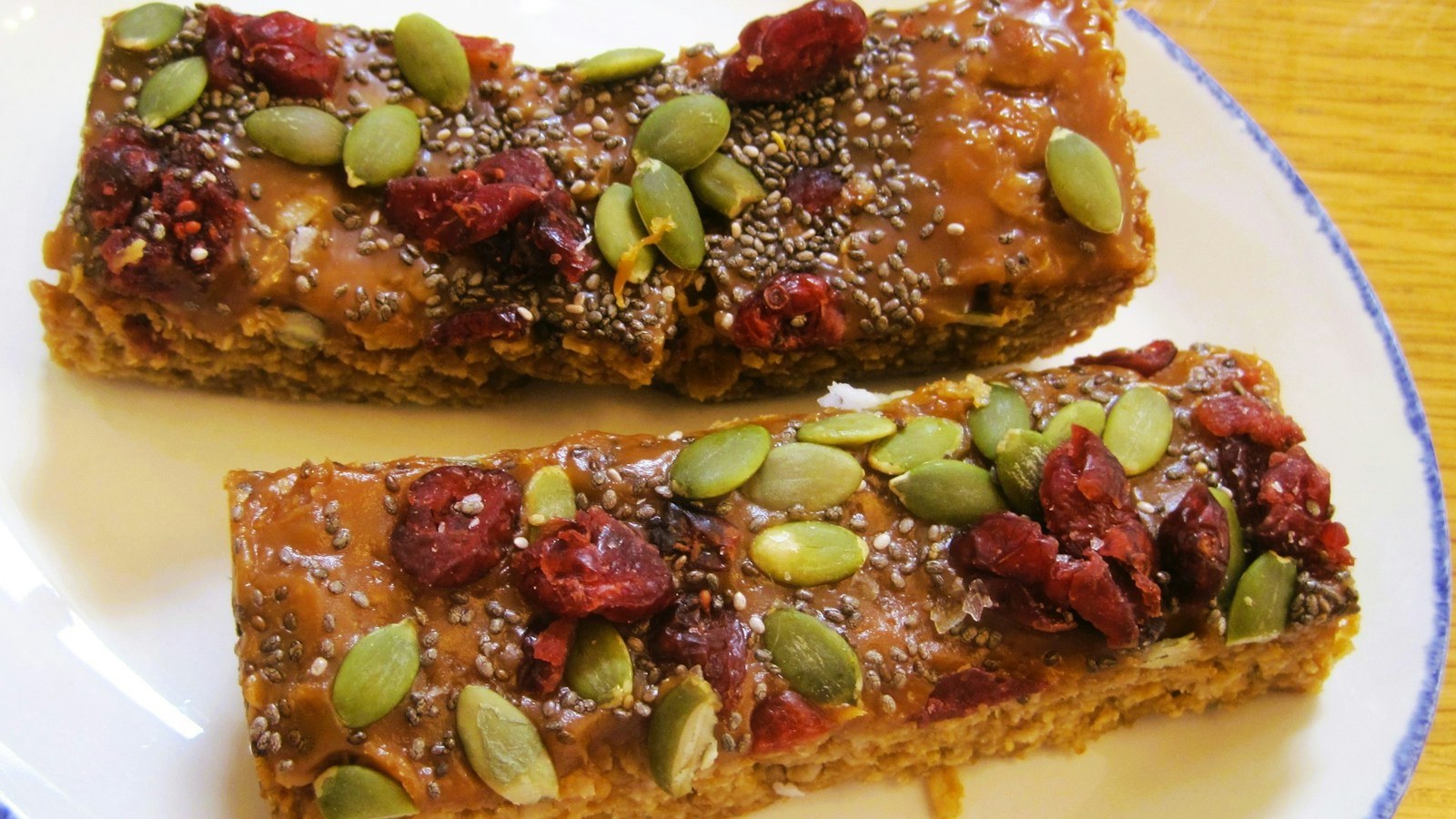
Homemade Energy Bars for Trail Running: 35 g Carbs Each
Oats, dates, honey, peanut butter and a pinch of salt: 10 bars at about 35 g of carbs each. With the maths, an hour-by-hour fueling plan and tips to keep them in the heat.
Read →